



Namaste, diaspora family! Nepal is one week away from a new era. Balen Shah will be sworn in as prime minister on March 27, and the RSP is already assembling a lean cabinet after amending its charter to clear the legal path. Meanwhile, the NRNA wrapped up its 12th Global Conference with a new president and a 12-point declaration that puts diaspora voting rights and citizenship reform back on the agenda. But the Gulf crisis continues to grind: 22 bodies of deceased Nepali workers remain stranded abroad, over 2,000 labour permits are being denied daily, and fuel prices just jumped again — pushing Nepali households toward induction stoves at record speed. And in a week that desperately needed some beauty, Leonardo DiCaprio’s “Snow Leopard Sisters” premiered in Kathmandu, spotlighting Nepali conservation on the global stage. Let’s get into it.
🏛️ Politics & Governance
Balen Shah to Be Sworn in as PM on March 27
The countdown to Nepal’s new government has a date. The Election Commission submitted the final results of all 275 House of Representatives seats to President Ramchandra Paudel on Wednesday, formally triggering the government formation process. Newly elected lawmakers will take their oath at Singha Durbar on March 26 at 2 p.m., after which RSP will elect Shah as parliamentary party leader and the President will appoint him under Article 76(1). The first parliamentary session is expected to begin March 30. To clear a technicality in the Political Parties Act, RSP amended Article 66 of its party charter this week to allow Shah — who is not yet a sitting MP — to be elected leader by the parliamentary caucus. Shah has signalled he wants a lean cabinet of around 15 ministers, with the party pledging not to exceed 18. Vice Presidents D.P. Aryal and Swarnim Wagle are among those being considered for key portfolios. With 182 seats, RSP will form the first single-party government since 1999 — no coalitions, no horse-trading (Kathmandu Post, Kathmandu Post).
Xi Jinping Book-Burning Sparks Diplomatic Incident
An awkward diplomatic row erupted this week after hundreds of copies of Xi Jinping’s “The Governance of China” were burned at Manmohan Technical University in Morang district. The Chinese Embassy in Kathmandu lodged a formal protest through a note verbale to the Ministry of Foreign Affairs, demanding swift action. The university insists the books — donated by the Chinese government — were destroyed inadvertently during a routine cleanup of termite-damaged materials. Nepal’s government formed a five-member investigation panel with 15 days to determine what happened, while the local Chief District Officer reportedly asked media outlets to delete viral video footage of the bonfire. The timing is especially sensitive: the incoming RSP government has signalled “balanced and dynamic diplomacy” with both India and China, promising to reposition Nepal from a “buffer state into a vibrant bridge.” How Kathmandu handles a symbolic slight to Beijing in its first diplomatic test will be closely watched across the region (Kathmandu Post, Reuters).
In Brief: A few more political developments as the transition unfolds.
PM Karki under fire for last-minute appointments. The outgoing interim PM drew sharp criticism from RSP, Gen Z activists, and opposition parties after appointing her personal secretary Adarsha Shrestha as NTNC chairperson and nominating Home Minister Om Prakash Aryal to the Upper House — moves critics say defeat the purpose of the September 2025 protests that brought her to power. A writ petition challenging Aryal’s nomination is now before the Supreme Court (Kathmandu Post).
RSP’s 57 proportional representation candidates are finalized, with the Election Commission distributing certificates to all 110 PR lawmakers. The breakdown: 17 Khas Arya, 16 indigenous nationalities, 8 Dalit, 4 Tharu, and 3 Muslim — fulfilling constitutional inclusion requirements (Nepal Press).
Dhanusha-1 remains the sole unresolved constituency after RSP candidate Kishori Sah was disqualified for appearing on the Credit Information Bureau blacklist. The case is before the Supreme Court (Himalayan Times).
🌍 Diaspora & Globalisation
NRNA’s 12th Global Conference — New Leadership, Big Demands
The Non-Resident Nepali Association elected Dr. Hem Raj Sharma as its new president by consensus at the 12th Global Conference in Kathmandu this week, with rival candidate Rabin Bajracharya withdrawing to preserve unity and accepting a vice-president role. Of 4,286 registered delegates, over 400 attended physically, with the rest joining online under the theme “Our Unity, Base for Prosperity.” The conference concluded with a 12-point Kathmandu Declaration that reads like a wishlist the diaspora has been drafting for decades: meaningful NRN citizenship reform, diaspora voting rights, simplified banking and investment channels, dignified labour protections for the 1.8 million Nepali workers in the Middle East, and priority investment in hydropower, agriculture, tourism, and IT. Outgoing president Binod Kunwar didn’t sugarcoat it, telling delegates that NRN citizenship currently offers “fewer practical benefits than a simple membership card.” Senior Advocate Radheshyam Adhikari described a “legal deadlock” preventing implementation. The new leadership’s “Jumbo Team” — 23 vice presidents, a general secretary, plus youth and women’s coordinators — signals ambitious scope. Whether the incoming RSP government takes the Declaration seriously will be the real test (Kathmandu Post, Review Nepal).
Gulf Crisis Week Three — Bodies Stranded, Permits Frozen, Workers in Limbo
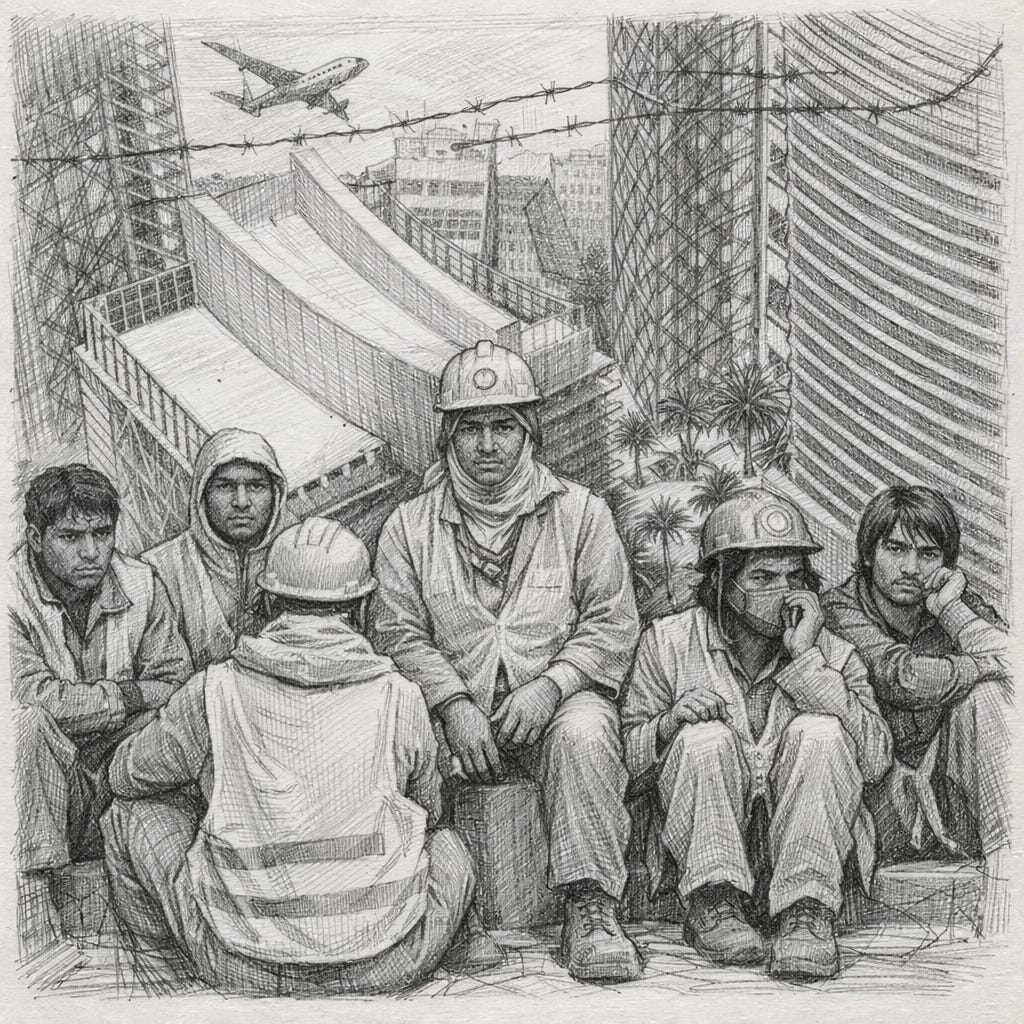
The human toll of the Gulf conflict is becoming harder to look away from. Twenty-two bodies of deceased Nepali migrant workers are now stranded across the region — 8 in the UAE, 7 in Kuwait, 7 in Saudi Arabia — despite embassies completing all repatriation paperwork. With Iran having attacked Dubai Airport three times since February 28 and commercial flights still severely disrupted, families are enduring waits of over a month, with transport costs running up to Rs 900,000 from Saudi Arabia. On the living side of the crisis, more than 2,000 workers are being denied labour permits every day. Some 20,500 with completed visa procedures cannot travel — 10,000 destined for the UAE, 5,500 for Saudi Arabia, 5,000 for Qatar. The government has resumed re-entry permits for seven countries (Saudi, UAE, Qatar, Oman, Yemen, Jordan, Turkey) but new worker permits remain frozen, and six countries — Israel, Lebanon, Iraq, Kuwait, Bahrain, Iran — sit in a permanent “Red Zone.” At the Gaddachauki border crossing in Kanchanpur, 200-250 workers who returned home to vote on March 5 are crossing back into India daily, heading to jobs in Uttarakhand, Mumbai, and Bangalore, expressing weary scepticism about whether any government will address the poverty that drives them abroad (Kathmandu Post, Kathmandu Post).
In Brief: More diaspora updates from around the world.
US court greenlights TPS termination for Nepalis. The 9th Circuit reversed a lower court order that had blocked the Trump administration’s decision to end Temporary Protected Status, leaving at least 7,000 Nepali TPS holders facing deportation risk after living in the US for over two decades. Nine Nepalis were deported to Kathmandu on a chartered flight on March 6 (Kathmandu Post).
Nepali designers lit up New York Fashion Week. Kriti Mainali debuted her “Heritage of Nepal” collection featuring motifs inspired by Swayambhunath and the Himalayas, while Prabal Gurung showcased his “anichya” (impermanence) collection at Cipriani 25 Broadway — a reminder that Nepal’s creative diaspora is thriving even when the news is heavy (NepYork).
Nepal is among 75 countries hit by an ongoing US immigrant visa suspension since January 21, tied to public charge reviews. Family-based green card priority dates remain largely stagnant (NepYork).
💸 Economy & Development
Fuel Crisis Reshapes Daily Life — Induction Stoves Fly Off Shelves
The Gulf conflict has now reached into every Nepali kitchen. Nepal Oil Corporation raised petrol prices by Rs 15 per litre this week (now Rs 172) and diesel and kerosene by Rs 10, after crude hit $105.87 per barrel following Iran’s Strait of Hormuz closure. In the mountain districts of Kalikot and Jumla, panic buying triggered acute LPG shortages — authorities confiscated 6,377 hoarded cylinders from a single warehouse and imposed a Rs 300,000 fine. The government has rolled out fuel-saving directives across ministries, restricted official vehicle use, and is considering odd-even rules for private cars. Freight charges jumped Rs 5,000 per ton, construction materials are spiking (steel rods up from Rs 95 to Rs 105/kg, cement up Rs 25/bag), and economy-class flights to the US now cost Rs 300,000. But there’s a silver lining in the surge: induction stove imports hit 132,000 units, up from 111,600 the previous year, as households rush to switch to electric cooking. The government’s target of 25% electric stove adoption by 2030 was once aspirational — the oil crisis may just force it to happen (Kathmandu Post, Spotlight Nepal).
ILO Warning — Nepal Could Lose 132,000 Jobs After LDC Graduation
As if the new government didn’t have enough on its plate, the International Labour Organization dropped a sobering report this week: Nepal’s graduation from Least Developed Country status in November 2026 could cost the economy nearly $1 billion and 132,000 jobs over five years, roughly half held by women, as trade preferences in textiles and apparel are withdrawn. The timing couldn’t be worse. Government revenue collection through eight months stands at just 50.49% of the Rs 1.48 trillion target, and capital expenditure is stuck at a dismal 19.24% of allocation. A World Bank report published the same week found that Nepal would need 41 years to complete its National Pride Projects at the current pace, with land acquisition alone running 150% over schedule and procurement timelines the longest in South Asia at 231 days. For an RSP government promising transformation, the bureaucratic machinery it inherits is moving at geological speed (Kathmandu Post, World Bank).
In Brief: A few more economic signals worth tracking.
The Green Climate Fund approved $36.1 million (with co-financing totalling nearly $50 million) to protect 2.3 million people living near four high-risk glacial lakes — Thulagi, Lower Barun, Lumding Tsho, and Hongu 2 — from outburst floods. It’s the largest climate adaptation grant Nepal has received (UNDP).
Nepal became the 173rd member of the OECD Global Forum on Tax Transparency, a step toward controlling illicit financial flows and boosting investor confidence that the new government can build on (OECD).
The World Bank approved $85 million for the Greater Lumbini Area Development Project, spanning Rupandehi, Kapilvastu, and Nawalparasi for heritage conservation and tourism infrastructure — a boost for Nepal’s most important pilgrimage site (Nepal News).
⭐ Social & Cultural
‘Snow Leopard Sisters’ Premieres in Nepal — DiCaprio-Produced Documentary
In a week heavy with crisis, here’s something luminous. “Snow Leopard Sisters,” an award-winning documentary executive produced by Leonardo DiCaprio and Oscar-winning filmmaker Joanna Natasegara, had its Nepal premiere at Labim Mall in Lalitpur on Wednesday. Directed by Sonam Choeki Lama, Ben Ayers, and Andrew Lynch, the film follows conservationist Tshiring Lhamu Lama as she mentors 17-year-old Tenzin Bhuti Gurung in tracking endangered snow leopards across the high passes of Dolpa — one of the most remote landscapes on Earth. It’s a story of women leading conservation in a region where fewer than 500 snow leopards are estimated to survive in Nepal’s mountains. For Nepali environmental storytelling, this is a landmark: a homegrown story, shot in Nepal, with Nepali women at its centre, backed by one of the biggest names in global environmental advocacy. If you get a chance to see it, take it (OnlineKhabar).
Two Protests, One Question — Will the New Government Deliver Accountability?
Two movements are testing Nepal’s conscience this week, and both will land on Balen Shah’s desk the moment he takes office. Gen Z activists staged protests at Maitighar Mandala in Kathmandu and outside the District Administration Office in Chitwan, demanding the full release of the commission report investigating the September 2025 uprising that killed 77 people. The government has released only a synopsis, despite promising transparency. Separately, the nationwide protests over the killing of 16-year-old Inisa BK in Surkhet continue to build, with students, teachers, and activists rallying from Kakarbhitta to Kathmandu demanding stricter rape laws and justice for the four detained suspects. Inisa’s family met Home Minister Om Prakash Aryal, who assured them “perpetrators will face the full extent of the law.” Both movements share a core demand: that Nepal’s institutions stop deferring accountability. The RSP rode to power on exactly this promise. Now it has to keep it (Kathmandu Post, Nepal News).
In Brief: A few more stories to close out the week.
Measles is spreading across Baglung. A total of 126 suspected cases have been reported since February 20, with schools closed and dozens of children hospitalised. Emergency vaccination campaigns have reached 4,617 people in Dhorpatan, with plans to vaccinate 7,000 more. Nepal had aimed to eliminate measles by 2026 — that target is now in jeopardy (Kathmandu Post).
US aid cuts are pushing girls toward child marriage. The termination of $329 million in funding forced closure of CARE’s UDAAN education initiative, putting over 307 girls in Madhesh and Lumbini provinces at risk. Emergency interventions helped 282 resume school, but the solution remains fragile (CARE).
Sujan Kakshapati won double gold at the Battle of Bavaria kung fu championship in Germany, scoring 23.02 in Chinese Creative Form and 22.58 in Traditional Form with Weapon against 1,200 participants from 10 nations. Quietly representing Nepal on the world stage (Nepal News).
Until next week, stay connected! — The Nepali Diaspora Digest Team
Let’s connect
Enjoying this issue? 📩 Share it with a friend & let’s keep Nepalis worldwide in the loop! Got thoughts? Hit reply—we’re all ears! Or let us know what you think via our Feedback form or follow us on Facebook | LinkedIn
P.S. Got a story or issue you’d like us to cover next week? Drop us a reply — we’re building this space together.
About Nepali Diaspora Digest:
The Nepali Diaspora Digest connects the global Nepali community with curated news, insights, and stories that matter most. Join us as we celebrate and explore the diverse voices and achievements of Nepalis worldwide.
Partner shout out
belayat.uk: helping Nepalis connect in the UK on jobs, housing, events and finding local Nepali owned businesses


