



Namaste, diaspora family! The honeymoon period — if there ever was one — is officially over. Home Minister Sudhan Gurung resigned after just 26 days in office, brought down by links to a businessman under money laundering investigation. It's the second cabinet exit in a month, and it stings: this was supposed to be the government that was different. Meanwhile, parliament was summoned and then suspended before it even sat — an unprecedented move that has the opposition crying foul. But it's not all turbulence: Gulf labour permits have been restored after a 50-day freeze, Nepal is about to make history at Harvard, and up in the Himalayas, three 8,000-metre peaks fell in 48 hours. Down at the Bagmati riverbank, though, Amnesty International is telling the government to put the bulldozers away. Let's get into it.
🏛️ Politics & Governance
Home Minister Gurung Resigns After 26 Days — Second Cabinet Exit in a Month
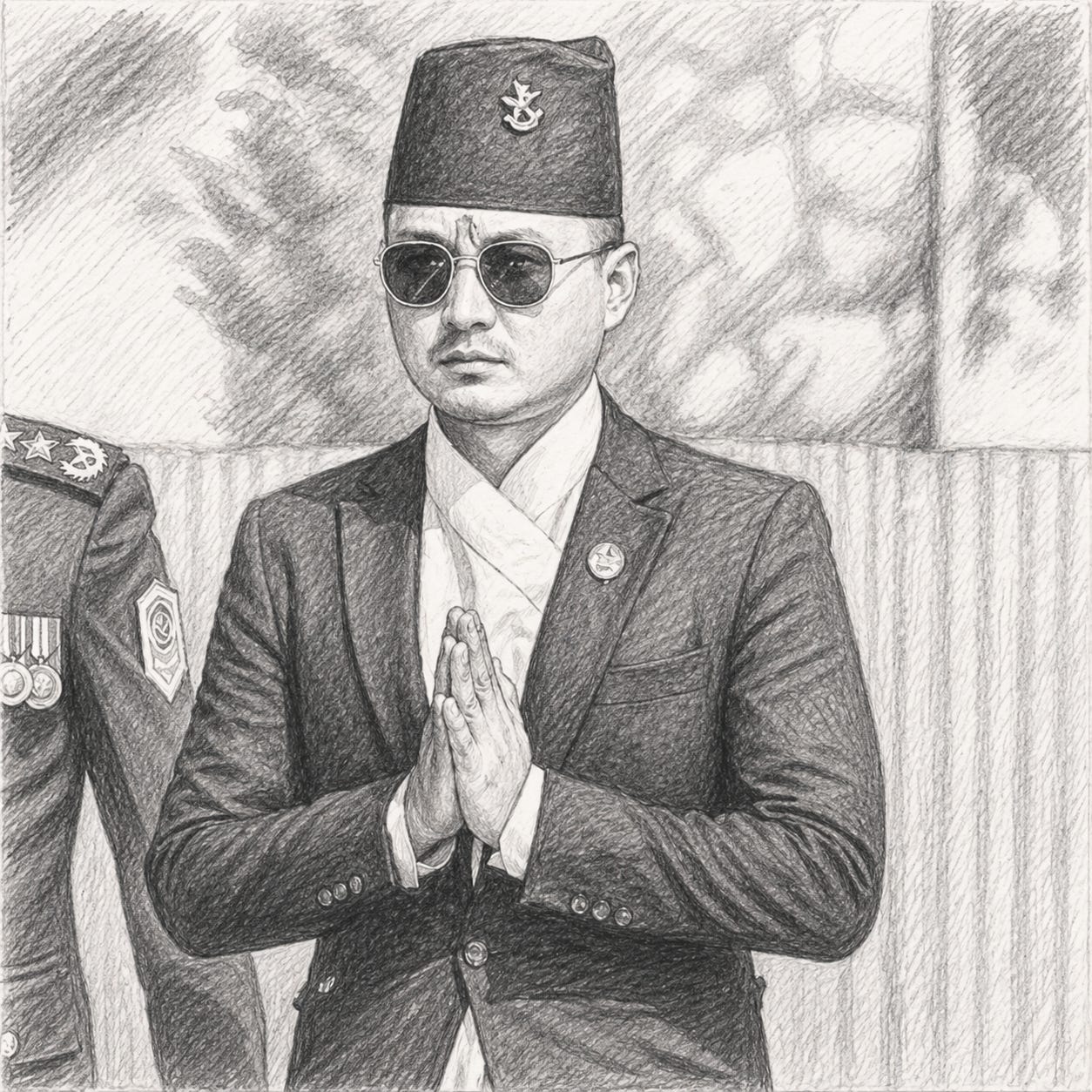
The shine came off fast. Home Minister Sudhan Gurung tendered his resignation on April 22 — just 26 days after being sworn in — citing the need to avoid “any conflict of interest” as investigations swirled around him. The trigger: media reports and leaked documents revealed that Gurung held shares in Star Micro Insurance Company, where he appears as shareholder number 49 with an investment of Rs 2.5 million. The problem? Deepak Bhatta, the businessman at the centre of Nepal’s biggest active money laundering probe, and Sulav Agrawal of the Shanker Group are also partners in the same firm. Gurung’s official property declaration on April 12 made no mention of these micro-insurance holdings. The resignation makes Gurung the second minister to exit PM Balen Shah’s cabinet in under a month — Deepak Kumar Sah was removed earlier over nepotism allegations. Al Jazeera’s headline captured the mood: “Nepal’s home minister resigns, second cabinet exit in one month.” PM Shah has taken over the Home Ministry portfolio himself. For a government elected on an anti-corruption mandate, the episode is a credibility test — and the OCCRP’s analysis, titled “Nepal’s Anti-Corruption Crackdown: New Era or False Dawn?”, asks the question many are thinking (Al Jazeera, Kathmandu Post, OCCRP).
Parliament Summoned, Then Suspended — Before It Even Sat
In a move opposition leaders are calling unprecedented, President Ram Chandra Paudel suspended the federal parliament session on April 23 — just one day after summoning both houses to convene on April 30. The Cabinet recommended the suspension citing “special reasons,” but disclosed nothing further. The timing raised immediate eyebrows: the suspension came within hours of Gurung’s resignation and amid the widening Bhatta-Shanker Group investigation. Senior Nepali Congress lawmaker Arjun Narsingh KC — the longest-serving parliamentarian — called the government’s decision “unprecedented and surprising.” For a government that promised transparency and zero pending files, suspending parliament before it has even met sends a mixed signal — and hands the opposition a talking point at a moment when UML is preparing its grand rally in Kathmandu on April 25 (Khabarhub, Outlook India, Radio Nepal).
In Brief: The political machinery keeps grinding — and cracking.
Deepak Bhatta and Sulav Agrawal were remanded in custody for an additional seven days on April 22 as the money laundering investigation widens. The OCCRP published a deep-dive feature asking whether Nepal’s crackdown represents genuine reform or another false dawn — noting that the Shanker Group’s Rs 125 billion turnover and Rs 200 billion in bank loans make this probe potentially systemic (OCCRP, Kathmandu Post).
Nepali Congress still can’t choose a parliamentary party leader. The election, scheduled for Friday, was postponed again — a taskforce led by VP Bishwaprakash Sharma has been formed to build consensus, but the Thapa-Sharma rivalry continues to paralyse the main opposition (Khabarhub).
CPN-UML’s two-week protest campaign climaxes with a grand rally in Kathmandu on April 25, after demonstrations rolled through municipalities, wards, and all seven provincial capitals. Whether the old guard can still fill the streets in the RSP era is about to be tested (Review Nepal).
🌍 Diaspora & Globalisation
Gulf Labour Permits Restored After 50-Day Freeze — 1.9 Million Workers Breathe Again
The gates are open again. On April 20, the Department of Foreign Employment reopened labour permits for 12 countries — Saudi Arabia, UAE, Qatar, Kuwait, Bahrain, Oman, Iraq, Yemen, Jordan, Lebanon, Turkey, and Israel — ending a 50-day freeze imposed on March 1 when the US-Iran conflict erupted. The decision followed a recommendation from the Emergency Response Team under the Ministry of Foreign Affairs, which assessed that conditions had improved enough to resume new labour approvals. The stakes are enormous: nearly 75% of Nepali migrant workers are employed in the Middle East, and their remittances account for more than 25% of GDP. But the resumption comes with caveats. The Diplomat published a major analysis — “Nepal’s Remittance Reckoning: The Gen Z Mandate Meets the Gulf Crisis” — warning that workers across the Gulf are already facing salary cuts, reduced hours, and contract non-renewals. A prolonged crisis threatens not just slower remittance flows but a reverse-migration wave of potentially hundreds of thousands of workers arriving home into an economy with very limited absorption capacity. The permits are open — but the risk hasn’t closed (Kathmandu Post, Middle East Eye, The Diplomat).
Nepal Discourse at Harvard — A First for the Diaspora
Mark the date: April 25–26, Nepali student organisations at Harvard University and MIT are convening the first-ever Nepal summit at an Ivy League institution. The Nepal Discourse 2026 brings together roughly 400 participants and 30 speakers to address Nepal’s structural challenges and emerging opportunities across four pillars: artificial intelligence, next-generation leadership, resilient institutions, and diaspora engagement. The speaker list reads like a who’s who of the Nepali innovation ecosystem: Biswas Dhakal (F1Soft), Sameer Maskey (Fusemachines), Prasanna Dhungel (GrowByData), and David Sislen (World Bank). AI researcher Karvika Thapa will speak at both Harvard and MIT on Nepal’s economic transformation. For a diaspora that has often felt disconnected from the decision-making table, having a Nepal-focused summit at Harvard is a symbolic milestone — and if the conversations translate into action, potentially a substantive one (Kathmandu Post, Technology Khabar).
In Brief: More diaspora developments this week.
US deportations of Nepalis have now exceeded 800 since President Trump’s second term began. A NepYork investigation published April 22 — “Tricked, Trafficked, and Tossed Out” — documents the dangerous pipeline of trafficking, exploitation, and eventual deportation that many Nepali migrants face. On April 7 alone, 48 Nepalis — including two green card holders — were deported on a single chartered flight (NepYork).
The government is preparing draft NRN legislation for the next parliamentary session, with Foreign Minister Khanal signalling intent to clearly incorporate the rights, responsibilities, and contributions of Nepalis abroad — the first concrete legislative movement on the NRN question in years (Peoples’ Review).
💸 Economy & Development
Fuel Crisis Goes Economy-Wide — Border Runs, Construction Halts & Tourist No-Shows
The fuel crisis is no longer just about the price at the pump — it’s rewriting daily life. With diesel at Rs 234.50 (up 68% in five weeks) and petrol at a record Rs 219, the cascading effects are now hitting every sector. Construction has slowed dramatically as contractors report soaring costs for diesel, bitumen, cement, and steel. Tourism is taking a hit: March 2026 data shows arrivals from the United States down 28% and from the United Kingdom down 20%, with higher transport costs and Middle East flight disruptions discouraging travel. And along Nepal’s 1,800-km open border with India, a new phenomenon has emerged: fuel tourism — Nepalis driving across to refuel where prices are significantly lower. The government’s two-day weekend (introduced April 6) has cut some fuel consumption, and the 50% customs duty cut helps NOC’s balance sheet — but NOC is still losing Rs 99 per litre on diesel and none of those savings reach consumers (Peoples’ Review, Kathmandu Post).
The Remittance Alarm — Two Major Analyses Say Nepal’s Lifeline Is Fraying
Two heavyweight analyses landed this week, and they’re saying the same thing. The Diplomat published “Nepal’s Remittance Reckoning: The Gen Z Mandate Meets the Gulf Crisis,” arguing that PM Shah “barely settled into office before colliding with a severe disruption to the remittance economy on which Nepal depends more than almost any other nation in the world.” The piece warns of a potential reverse-migration wave — hundreds of thousands of workers returning to an economy that can’t absorb them — and notes that Nepal imports 100% of its liquid fuels from India, which sources much of its crude from the Gulf, creating a double vulnerability. Separately, Spotlight Nepal published “When Conflict Abroad Leads to Economic Risks at Home,” documenting the hidden layer: many migrant workers fund their migration through high-interest loans secured against land and family property, meaning disrupted earnings abroad don’t just reduce remittances — they trigger household debt crises and forced asset sales. The World Bank projects poverty rising to 6.6% in FY26, with 17,267 additional people pushed into poverty by the conflict alone (The Diplomat, Spotlight Nepal).
In Brief: A few more economic signals this week.
LPG demand has dropped 50%, with gas industries reporting the steepest decline in years. The driver: a government directive requiring half-weight cylinder distribution combined with an accelerating consumer shift to electric cooking. In a country with surplus hydropower, the transition makes strategic sense — but it’s hitting the LPG supply chain hard (Nepal News).
Banana prices hit Rs 350 per dozen after the government halted imports from India. Traders say domestic production simply cannot meet demand — a reminder that import bans without supply alternatives create shortages, not self-sufficiency (Nepal News).
NEPSE held steady around 2,838, essentially flat on the week. Gold continues its record run driven by global safe-haven demand.
⭐ Social & Cultural
Dozers at the Riverbank — Thapathali Eviction Draws Amnesty Intervention
The reform government’s hardest week yet didn’t come from parliament — it came from the Bagmati riverbank. On April 23, teams from the metropolitan police, Nepal Police, and Armed Police Force moved through the Thapathali squatter settlement with loudspeaker warnings: clear out by Saturday morning, or the bulldozers move in. The eviction order, directed by PM Shah in a meeting with security chiefs, covers settlements along the Bagmati in Thapathali, Sinamangal, Teku, and Balkhu. The Kathmandu Post captured the human cost in a headline: “Where do we go now?” — residents who have lived there for decades were given less than 24 hours to move. By Friday, protests had erupted across the affected areas. Amnesty International issued an urgent statement calling on the government to immediately halt the evictions, warning they demonstrate “a blatant disregard for Nepal’s human rights obligations and the rule of law.” The tension is real: riverbank encroachment is a genuine environmental and urban planning problem, but mass evictions without resettlement plans raise fundamental rights questions (Kathmandu Post, Khabarhub, Amnesty/Ratopati).
Three 8,000ers in 48 Hours — Spring Climbing Season Explodes Open
The mountains don’t care about politics. On April 17–18, the spring 2026 climbing season burst open with successful summits on three of the world’s fourteen 8,000-metre peaks within 48 hours: Annapurna (8,091m), Dhaulagiri (8,167m), and Makalu (8,485m). The first summit came on Annapurna, where 14 Peaks Expedition placed five international climbers and 11 Nepali guides on top of the world’s tenth-highest — and statistically deadliest — peak. The Department of Tourism has issued 27 climbing permits for Annapurna this season, generating Rs 12.49 million in revenue. Attention now turns to Everest, where the Icefall Doctors are progressing through the Khumbu Icefall and a 10-member fixing team is preparing the route to the summit. The main Everest summit window is expected in mid-to-late May (Himalayan Times, Peoples’ Review).
In Brief: A few more stories to round out the week.
Nepal’s women’s cricket team beat Italy by 50 runs in the ICC Women’s T20 Challenge Trophy in Kigali, Rwanda on April 19 — the team’s first-ever win in the tournament. Vice-captain Pooja Mahato scored 48 runs, and Rubina Chhetry was devastating with the ball, taking 4 wickets for just 4 runs in 2.4 overs (Himalayan Times).
The ICC CWC League 2 tri-series kicks off at TU International Cricket Ground, Kirtipur on April 25 — Nepal vs Oman and UAE. Captain Rohit Paudel’s side needs a strong home campaign to keep World Cup qualification hopes alive (ICC).
It was always going to get harder from here. The easy part was winning the election.
Until next week, stay connected!
Let’s connect
Enjoying this issue? 📩 Share it with a friend & let’s keep Nepalis worldwide in the loop! Got thoughts? Hit reply—we’re all ears! Or let us know what you think via our Feedback form or follow us on Facebook | LinkedIn
P.S. Got a story or issue you’d like us to cover next week? Drop us a reply — we’re building this space together.
About Nepali Diaspora Digest:
The Nepali Diaspora Digest connects the global Nepali community with curated news, insights, and stories that matter most. Join us as we celebrate and explore the diverse voices and achievements of Nepalis worldwide.
Partner shout out
belayat.uk: helping Nepalis connect in the UK on jobs, housing, events and finding local Nepali owned businesses


