



Namaste, diaspora family! It’s a week where the news came from the mountains, the highways, and the tea gardens. After three weeks stranded at the Indian border under a new lab-testing rule, Ilam’s tea trucks finally started rolling again as Delhi quietly blinked. On Everest, Kami Rita Sherpa logged his 32nd summit and Lhakpa Sherpa her 11th — two world records on the same mountain on the same morning — before a record 274 climbers crowded the top in a single day. In Kathmandu, Uber quietly turned on the app, Manoj Kumar Sharma was sworn in as Chief Justice despite a Bar-led revolt over seniority, and ANFA crawled back from a FIFA-ban scare. And the diaspora? Still sending home Rs 7 billion a day. Let’s get into it.
🏛️ Politics & Governance
Sharma Sworn In — The Seniority Bypass Becomes a Fait Accompli
Two weeks ago, the Constitutional Council’s pick of fourth-ranked Dr. Manoj Kumar Sharma for Chief Justice — over three more senior justices including the woman who would have been Nepal’s first female CJ — looked like a story that might still bend. It didn’t. On May 19, the Parliamentary Hearing Committee reviewed 16 complaints filed against Sharma and unanimously endorsed his nomination. A day later, on May 20, President Ram Chandra Paudel swore him in as Nepal’s 33rd Chief Justice. The Nepal Bar Association‘s emergency meeting, Acting CJ Sapana Pradhan Malla‘s implicit case, and dissent from National Assembly Chair Narayan Prasad Dahal all weighed less than a clear ordinance and a government willing to use it. Sharma now inherits a Supreme Court docket that includes the Kamalpokhari guthi case, ongoing transitional-justice petitions, and — inevitably — challenges to the very ordinances that put him there. For the diaspora, the precedent matters as much as the person: judicial seniority in Nepal is no longer load-bearing (Kathmandu Post, Kathmandu Post).
Parliament in Paralysis — Picket Lines and a Postponed Budget
The budget session that was supposed to begin on May 11 has spent most of its first ten days locked in obstruction. On May 21, opposition MPs from the Nepali Congress, CPN-UML and the new Shram Sanskriti Party picketed the well of the lower house demanding PM Balen Shah appear in person to face questions on policy, ordinances and the wave of dismissals. Shah skipped Wednesday’s session, sent word he’d attend Thursday, and didn’t. Frustrated lawmakers accused him of “avoiding parliamentary scrutiny” and chanted for his resignation. Meanwhile, the government has postponed the formal budget meeting overnight and accelerated the ordinance pipeline — drawing criticism from former parliamentarians and constitutional lawyers that the executive is now governing around, rather than through, the legislature. The constitutional deadline to present the 2026/27 budget remains May 29, leaving a one-week runway and a parliament that hasn’t yet allowed the Finance Minister to speak (Tribune India, Khabarhub, Click Nepal).
In Brief: More from the political week.
16 complaints, zero traction. The Parliamentary Hearing Committee reviewed every complaint filed against Sharma — including conduct, jurisprudence, and the seniority-bypass itself — and dismissed all of them in a single sitting (Kathmandu Post).
Finance ministry trims fiscal transfers. Only 21.02% of the fourth-quarter equalization grant is going to provinces and local governments — down from the standard 25% — over objections from the National Natural Resources and Fiscal Commission (Nepal News).
Ordinance surge continues. Critics in the press are now framing the post-March 26 government as one that has issued more ordinances per month than any cabinet in recent memory (Khabarhub).
🌍 Diaspora & Globalisation
Rs 7 Billion a Day — The Diaspora Is Quietly Carrying the Economy
While Kathmandu’s politics burns, the diaspora has been writing one of the most remarkable macroeconomic stories of the decade. Nepal received Rs 209.75 billion in remittances between mid-March and mid-April — roughly Rs 7 billion every single day. Across the first nine months of FY 2025/26, total inflows hit Rs 1.659 trillion, a stunning 39.1% year-on-year jump. In dollar terms that’s $11.55 billion, up 31.9%. Remittances are now projected to clock in at ~33% of GDP this year, up from 27.8% last year. Forex reserves have ballooned to $23.55 billion, enough to cover well over a year of imports. The rupee’s 7.5% depreciation against the dollar helped, but the underlying story is volume: more Nepalis abroad, sending more money, more often. For NRNs, the irony is sharp — the people the new draft bill threatens to strip of voting rights are the people keeping the macro picture intact (Kathmandu Post, Nepal News).
Malaysia Locks in the Health-Screening Rules — What Outbound Workers Need to Know
If you’re heading to Kuala Lumpur on a labour permit — or you know someone who is — read this carefully. On May 18, the Malaysian Embassy in Kathmandu issued a public notice clarifying the long-disputed health screening regime under the Biomedical System (BMS). The arrangement, anchored in the bilateral labour agreement signed on October 29, 2018, lays out three key points: examinations must be conducted only through 36 authorised health institutions in Nepal; an additional Rs 3,000 service charge above the Nepal government’s fee applies; and all BMS-related costs are to be borne by the Malaysian employer, who must reimburse workers via the first month’s salary. The notice is a direct response to months of complaints from rights groups and migrant aspirants about overcharging at unauthorised clinics. Malaysia remains the single largest destination for Nepali migrant workers — 219,357 went there in 2023 alone — and the absence of clear, enforceable rules has been the single biggest leak in the system. The new clarification doesn’t fix everything, but it’s a start (Kathmandu Post).
In Brief: A few more diaspora signals.
NRN bill backlash builds. Diaspora bodies — including NRNA New Zealand — are now publicly calling for the draft NRN Act 2026 to be scrapped, arguing it strips political and voting rights rather than expanding them (Annapurna Express).
A women’s-record holder of Nepali origin. Lhakpa Sherpa, who summited Everest for the 11th time this week, has lived in the United States for over two decades. Her record is a diaspora story as much as a Nepali one (Al Jazeera).
Indian fuel hike will bite at the pump. Indian state oil companies raised petrol and diesel prices by more than 3% — and because Nepal imports its entire fuel supply from India, transport and food prices will follow within weeks (Nepal News).
💸 Economy & Development
Uber Lands in Kathmandu — Soft Launch, Hard Questions
The world’s biggest ride-hailing app finally turned on the lights in Nepal. On May 21, Uber quietly went live in the Kathmandu Valley with a “test launch,” offering both bike and car rides through the app, with a formal launch scheduled for June 1. The local play is a back-office partnership with Taximandu, which is handling driver onboarding, technical coordination and dispute resolution — roughly 1,000 drivers have signed on already. For a market already crowded with Pathao, inDriver, Indrive and Tootle, Uber’s arrival is more about validation than disruption. But there’s a wrinkle: government officials confirm that no formal application for foreign investment or company registration under Uber’s name has been received. The Taximandu workaround lets Uber operate without yet committing to FDI paperwork — a posture that’s already triggering transparency questions at the Department of Industry. Expect a regulatory tussle within weeks. For the diaspora, it’s the first time arriving at TIA and opening the same Uber app you use in Sydney or New Jersey will actually summon a ride (Kathmandu Post, Meroauto).
Tea Gets a Reprieve — India Eases the Lab-Testing Rule
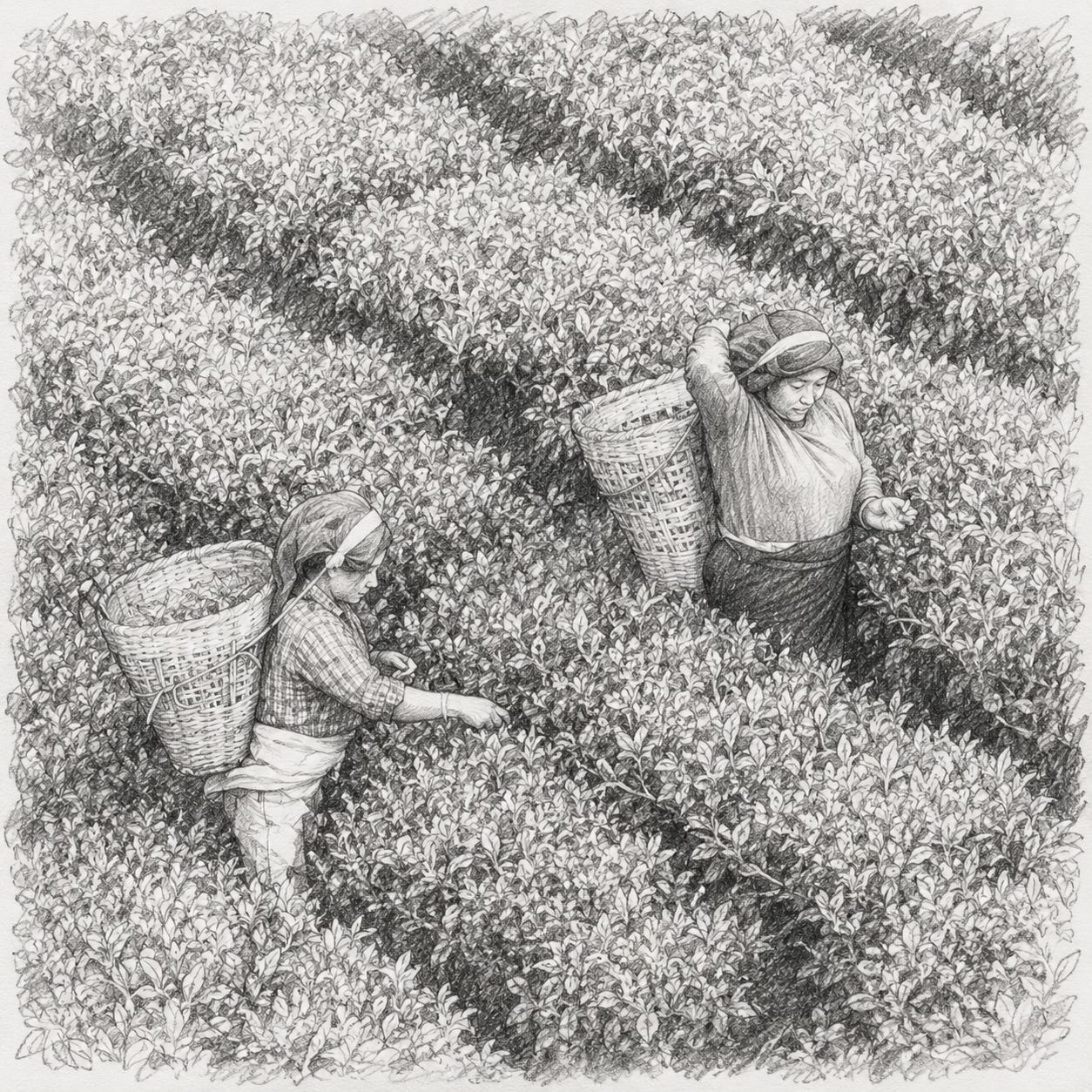
A three-week border headache for Ilam’s tea growers ended quietly this week. India’s Tea Board, acting on instructions from the Ministry of Commerce and Industry, has relaxed the mandatory lab-testing rule it had imposed on imported tea on May 1. Under the original rule, every consignment crossing Panitanki and other border points had to be sent to a Kolkata central food lab for testing — a process that stranded trucks, blew up costs, and threatened to wipe out a Rs 6 billion export trade. Under the revised SOP, tea destined for sale within India is exempt from mandatory testing; only re-export-bound tea still needs the lab certificate. For Nepal’s orthodox tea industry — which sells roughly 90% of its premium leaf to India — the climb-down is a major win. But growers are already drawing the broader lesson: India can turn the tap off on Nepali exports overnight, and the response can’t be diplomatic begging. Two industry voices this week argued — quietly — that China’s renewed interest in Ilam gardens is no longer just a curiosity. It’s an insurance policy (Kathmandu Post, Asia News Network).
In Brief: More economic signals.
Everest royalties at Rs 1.24 billion. As of May 21, the Department of Tourism had issued permits to 1,157 mountaineers across 30 peaks — a record haul. Everest alone brought in nearly $6 million at the new $15,000-per-climber rate (Kathmandu Post).
Finance Secretary signals private-sector tilt. Ghanshyam Upadhyaya previewed the FY 2026/27 budget as one designed to “attract private investment,” arguing productivity growth can’t come from government spending. The budget hits parliament May 29 (Nepal News).
Capital spending still broken. With two months left in the fiscal year, the government has spent 68.98% of its recurrent budget but only 27.91% of capital — the same chronic execution gap that’s plagued every budget since federalism began (Nepal News).
⭐ Social & Cultural
Three Records in a Week — and a Warning From the Man Who Set One
This was the kind of week that makes Nepal’s mountaineering legend feel both deserved and unsustainable. On May 17, Kami Rita Sherpa, 56, reached the Everest summit at 10:12 am NPT — his 32nd ascent, extending his own world record. The same morning, Lhakpa Sherpa, 52, reached the top for the 11th time, extending her record as the woman with the most Everest ascents. And on May 20, 274 climbers topped out in a single day — the most ever from the Nepal side. Spring 2026 has now set records in royalty revenue, permit numbers, and single-day summits. Then, this Thursday, Kami Rita said the quiet part loud: he is calling on Nepal to cap Everest permits and prioritise climber quality over volume. Coming from the man whose summit count is the global benchmark, the warning is hard to dismiss. For a country that just collected Rs 1.24 billion in mountaineering royalties this season, the question is whether tourism revenue or climber safety wins the next policy round (Kathmandu Post, Kathmandu Post, Washington Post).
ANFA Back in the Game — Football Pulls Off a Last-Minute Save
A fortnight ago, Nepali football was staring down a FIFA suspension that would have frozen the national side from international competition, evaporated FIFA funding for four years, and pulled the women’s team out of the SAFF Women’s Championship. This week, the brinkmanship broke. On May 15, Education and Sports Minister Sasmit Pokharel convened a meeting with the NSC and All Nepal Football Association at the ministry and announced the NSC suspension on ANFA was being revoked. By May 16, ANFA officials were back at their desks at Satdobato. Crucially, FIFA followed by lifting its four-year funding ban on ANFA — a development that restores millions in Forward Programme money and unblocks development grassroots projects that had been stuck since 2021. The Kathmandu Post’s read is sharp: this isn’t because anyone solved the underlying governance row between ANFA and NSC. It’s because FIFA’s deadline was real, and someone in government finally believed it. Nepal’s women now travel to the SAFF Championship; the national team gets back to League 2 prep (Kathmandu Post, Kathmandu Post, Nepal News).
In Brief: Rounding out the week.
Cricket sweep at Kirtipur. Nepal beat USA (May 16), beat Scotland by 6 wickets (May 18), and beat USA again today (May 22) at TU Cricket Ground after posting 317/8. League 2 qualification math is now genuinely interesting again (ESPNcricinfo, ESPNcricinfo).
Bagmati demolitions push into Kapan. Kathmandu Valley authorities intensified the drive against illegal construction along the Bagmati and its tributaries this week, with Kapan the latest neighbourhood in the crosshairs. Heritage groups are watching to see whether the same energy reaches Kamalpokhari (Kathmandu Post).
Top-100 cricketers. Aasif Sheikh and Dipendra Singh Airee are now both inside the ICC ODI Top 100 batting rankings — a first for Nepal (Nepal News).
Until next week, stay connected!
Let’s connect
Enjoying this issue? 📩 Share it with a friend & let’s keep Nepalis worldwide in the loop! Got thoughts? Hit reply—we’re all ears! Or let us know what you think via our Feedback form or follow us on Facebook | LinkedIn
P.S. Got a story or issue you’d like us to cover next week? Drop us a reply — we’re building this space together.
About Nepali Diaspora Digest:
The Nepali Diaspora Digest connects the global Nepali community with curated news, insights, and stories that matter most. Join us as we celebrate and explore the diverse voices and achievements of Nepalis worldwide.
Partner shout out
belayat.uk: helping Nepalis connect in the UK on jobs, housing, events and finding local Nepali owned businesses


