


Namaste, diaspora family. This was a hard week, and we will not pretend otherwise. As we write, search teams in Pakistan’s Karakoram are still looking for Nirmal “Nimsdai” Purja and several Nepali climbers swept off Broad Peak by an avalanche, and his tracker was still showing movement on Friday morning. Back home, communal violence in Sunsari spread across four Tarai districts and left three people dead, with the Prime Minister and Home Minister criticised for reaching the scene days too late. Doctors across the country shut their outpatient doors for two days. Hold your people close this week, and let’s get into it.
🌍 Diaspora & Globalisation
A Missile in Kuwait, a Family in Terhathum
The war that has been showing up in our lives as a fuel price now has a Nepali name attached to it. Som Kumar Tamang, 44, from Terhathum in eastern Nepal, was killed on July 30 when an Iranian ballistic missile struck a Chinese company’s building in northern Kuwait. He had worked there as a driver since 2022. He is the second Nepali killed since the conflict across West Asia escalated, after Diwas Shrestha of Gorkha died in the UAE. Kuwait’s defence ministry said emergency procedures were launched immediately; Nepal’s embassy in Kuwait is working with Kuwaiti authorities to repatriate his body. What makes this land so heavily is the arithmetic behind it. Roughly 186,000 Nepalis work in Kuwait, about 4 percent of that country’s entire population, and most of them cannot simply leave a contract because a region has become dangerous. When we talk about remittances, this is the risk sitting quietly underneath the number (The Kathmandu Post).
Saudi Arabia Shuts the Visa Window
A licensing fight in Kathmandu has become a cancelled flight for thousands of families. Saudi Arabia has stopped issuing work visas to Nepalis in five job categories, including loading and unloading, portering, cart operation and construction, after Nepal’s government sealed the Industrial Training Institute in Basundhara, ruling it had no legal authority to run the Skill Verification Programme tests the Saudis now require. Saudi Arabia took about 77,000 Nepali workers last year, so the freeze is not a small one. Recruiters say the deeper problem is the testing itself: the official Saudi fee is $50, roughly Rs 7,500, but the operator was collecting Rs 10,000, and a worker who fails has to pay again. “A private institution has created a monopoly in the name of skill testing, piling financial burden on workers,” said Mahesh Kumar Basnet of the Nepal Association of Foreign Employment Agencies. Talks with the Saudi embassy are underway. Until they land, aspirants sit at home with loans already taken (The Kathmandu Post).
In Brief: Three more notes from the community abroad.
The Australian door narrows. Australia has rejected about 64 percent of offshore student visa applications from Nepal, the highest rate on record. Just 2,700 of 7,500 applicants were approved between January and May, against 7,167 of 8,028 a year earlier, after Nepal was moved to Australia’s highest-risk assessment band. The application fee, A$2,500, is not refunded when you are refused (The Kathmandu Post).
Two shifts for the passport queue. The Department of Passports is moving to two shifts to clear its delivery backlog, and the Cabinet has cleared an amendment to the Passport Act for registration in Parliament. Anyone who has waited abroad on a renewal knows why this matters (The Kathmandu Post).
A crown in Virginia. Deepika Sharma of Maryland was crowned Miss Nepal North America 2026 on July 25, with runners-up from Michigan, South Carolina and Texas. We flagged the finale last week; it landed just outside Washington, in Clifton, Virginia (Glamour Nepal).
🏛️ Politics & Governance
Three Dead, Four Districts, and a Government That Arrived Late
It began on the night of Sunday, July 26, at Kaptanganj in Dewanganj, Sunsari, where Bolbam devotees carrying holy water from the Koshi Barrage passed a mosque playing loud music, on top of an earlier quarrel over a community flag on an electricity pole. Crowds formed with sticks, stones and iron rods. Police fired warning shots and then live rounds, killing Om Prakash Mehta; Jaya Prakash Mehta, 20, died later of his injuries. By Thursday it had spread, and Ganesh Yadav, just 17, was shot dead in Siraha’s Golbazar. Curfews now cover Sunsari, Saptari, Siraha and Dhanusha, with prohibitory orders in Parsa and a curfew reimposed in Birgunj. The hardest detail is the one about the state: the Sunsari district police chief and the Koshi Province police chief were both on leave as it unfolded. Prime Minister Balendra Shah met security chiefs on day four and convened the National Security Council on day five, and Home Minister Sudan Gurung reached Sunsari on day four (The Kathmandu Post).
The Bill Comes Due in Parliament
The political reckoning arrived on July 30, when the House of Representatives sat for the first time since passing the budget. Nepali Congress, CPN-UML, the Nepali Communist Party and Shram Sanskriti Party jointly demanded that both the Prime Minister and the Home Minister resign over Sunsari. “Why did the prime minister and home minister not treat the Sunsari incident seriously from the beginning?” asked human rights advocate Mohna Ansari. A seven-point agreement signed on July 31 promised martyr status for the dead, Rs 1 million to each family, jobs, an impartial investigation and a memorial park, and the families initially refused to accept the bodies anyway. Meanwhile the House returned with almost nothing to legislate: 8 bills in lower house committees, none pending in the upper house, against a stated government target of 166 bills for the year. A government elected on the promise of a rebuilt state is now being asked, from two directions at once, where the state actually is (The Kathmandu Post).
In Brief: The rest of the week in governance.
Maps on the table in Lucknow. Nepal and India will hold the 13th meeting of the Survey Officials’ Committee in Lucknow from August 12 to 14, approving the workplan and budget agreed at the last Boundary Working Group and reviewing GPS base stations. Kalapani and Susta remain outside its remit (The Kathmandu Post).
An election chief, finally. The Parliamentary Hearing Committee unanimously approved Man Bahadur Karki as Chief Election Commissioner, with Guru Prasad Wagle and Rajiv Subba as commissioners, and sent the confirmation to the President’s Office. A quiet appointment with loud consequences ahead (Nepal News).
Seventeen years later. A senior Ministry of Foreign Affairs official has been charged over the alleged misuse of travel documents in a case dating back 17 years, a reminder of how slowly accountability moves even in a crackdown era (The Kathmandu Post).
💸 Economy & Development
The War Reaches the Petrol Pump
The same conflict that killed Som Kumar Tamang is now working its way through every shop in Nepal. Wholesale inflation hit 8.47 percent in the month to mid-June, a 39-month high, up from just 1.56 percent a year earlier. Energy prices alone rose 48.14 percent. Since the February 28 US and Israeli assault on Iran, petrol has gone from Rs 156 to Rs 219 a litre, diesel from Rs 139 to Rs 237, and a cylinder of LPG from Rs 1,910 to Rs 2,160. Consumer inflation is still a more modest 5.22 percent, but wholesale prices lead retail ones by two or three months, which puts the real squeeze right around Dashain. “There is a tendency to pass the entire increase in costs to consumers, and often even add extra margins,” warned Nara Bahadur Thapa, a former Nepal Rastra Bank executive director. If you are planning what to send home this festival season, plan for it to buy less (The Kathmandu Post).
Nepal Now Imports Its Dinner
Here is a number that should stop us all. Nepal’s food import bill reached Rs 434.26 billion in the fiscal year just ended, making food the country’s second-largest external dependency after petroleum. Crude edible oil accounted for Rs 168.26 billion, much of it re-exported to India, followed by rice and paddy at Rs 39.53 billion, seeds at Rs 38.99 billion, vegetables at Rs 38.35 billion and fruit at Rs 34.73 billion. For scale: in 2009-10 the entire food import bill was Rs 44.43 billion. A country of farmers now buys its rice abroad, in part because the hands that used to plant it are in Doha and Kuala Lumpur, and in part because farming stopped paying. “Like petroleum products, we are now almost entirely dependent on imported food,” says Nahendra Khadka of the National Peasants Coalition. India’s sugar export restrictions, in force through September, are already driving smuggling ahead of the festivals (The Kathmandu Post).
In Brief: A few more entries for the ledger.
A life, priced properly. The Cabinet cleared a bill raising the compensation ceiling for victims of domestic air accidents to $100,000, a serious increase in a country where most of us take a domestic leg on every trip home (The Kathmandu Post).
Markets steady, hundi busted. NEPSE rose 12.96 points to close the week at 2,685.54, ending four straight losing sessions, while the central bank absorbed Rs 30 billion of excess liquidity. Separately, the CIB arrested a 49-year-old man on July 27 over an alleged illegal remittance network, the informal hundi channel that still competes with the banks many of us use (Nepal News).
Dal bhat goes abroad, properly this time. The Nepali restaurant chain Jimbu Thakali opened its first outlet outside Nepal, in India. A small thing, but a welcome inversion of the usual story: a Nepali brand travelling, not just Nepali workers (The Kathmandu Post).
⭐ Social & Cultural
Broad Peak Goes Quiet
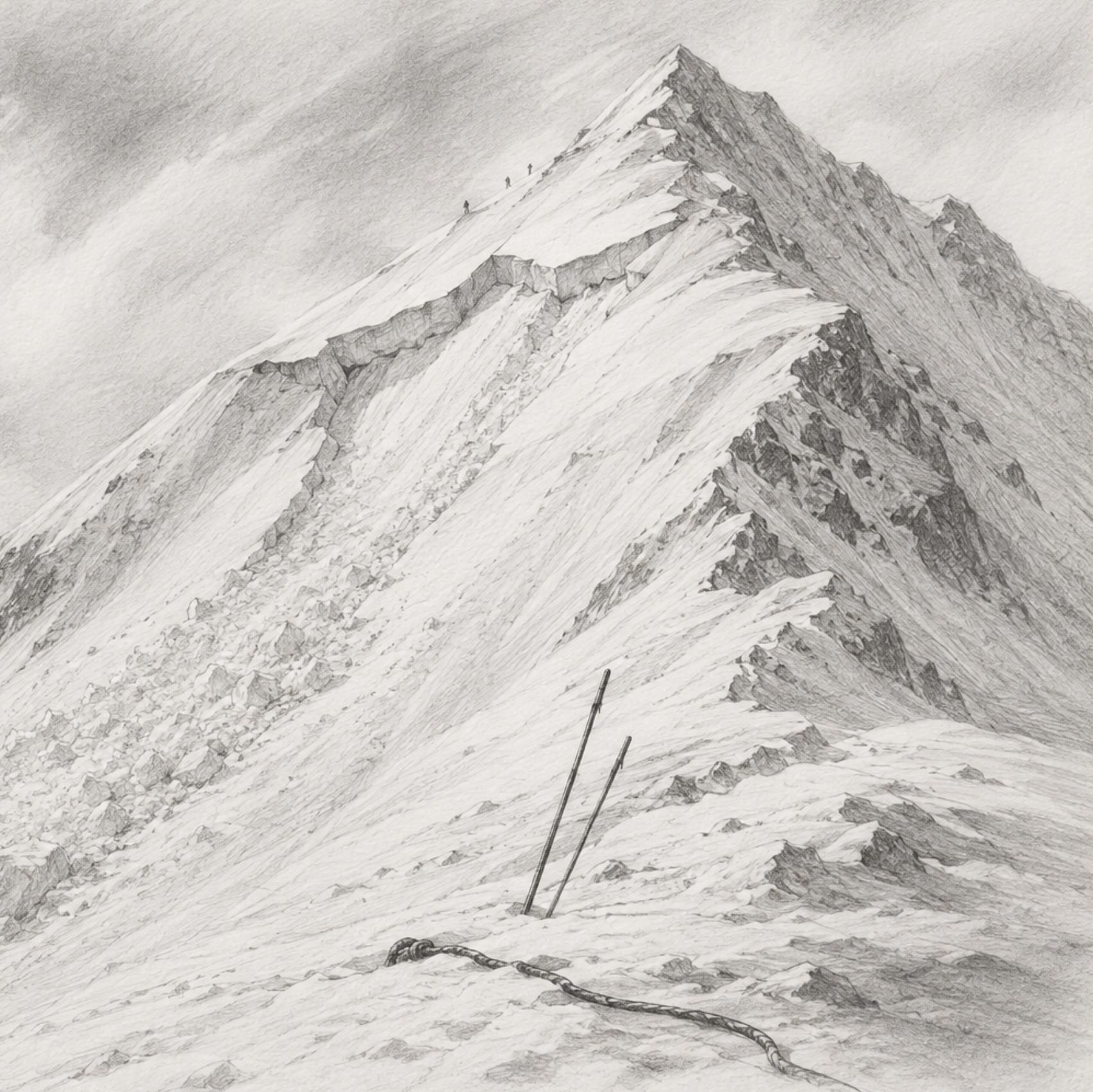
Around 9am on Thursday, July 30, an avalanche swept a ten-member international team high on Broad Peak, the 8,047-metre giant beside K2 in Pakistan’s Karakoram. Among them was Nirmal “Nimsdai” Purja, 43, the Nepal-born British climber who summited all fourteen 8,000-metre peaks in 189 days in 2019 and who, more than anyone alive, changed how the world sees Nepali mountaineers. As of Friday night, three bodies had been recovered, including Nepali climber Pur Bahadur “Yukta” Gurung and Oman’s Nadhira Al Harthy, the first Omani woman to summit Everest. Drones sighted six more climbers on Friday afternoon, their condition unknown. Purja’s tracking device kept registering movement until Friday morning, and no one is willing to close the door on that. Also unaccounted for are Kili Pemba Sherpa, Nima Sherpa, Gyalu Sherpa and Nawang Thindu Sherpa. “It’s not like Everest. Communication out there is very limited,” said Changdawa Sherpa. We are publishing while the search continues, and we are hoping (The Kathmandu Post).
The Day the Doctors Closed the Door
On July 25 at Narayani Hospital in Birgunj, a 45-year-old heart patient died in the emergency ward. Relatives allegedly stormed the hospital, vandalised it and assaulted Dr Pramod Ram. What followed was unprecedented: the Nepal Medical Association shut all outpatient services nationwide, at government, private and community hospitals alike, for two days, leaving hundreds of thousands of patients turned away with only emergency care running. The strike ended on July 29 with a five-point agreement under which the Home Ministry will prosecute those responsible under the Health Workers and Health Institutions Security Act, 2009. Neither side comes out of this clean, and both are trapped in the same shortage: too few doctors and nurses, too many desperate families, meeting in an understaffed corridor at the worst moment of their lives. It is also, quietly, part of why so many Nepali medics end up staffing hospitals in our cities instead of theirs (The Kathmandu Post).
In Brief: Three last notes to close a heavy week.
Winless in Utrecht. Nepal finished the ICC World Cup League 2 tri-series without a victory, losing to Namibia by 3 runs on July 27 (211/7 to 208/6) and to the Netherlands by 57 on July 29. Four matches, no wins, and a batting order that has some thinking to do before the next assignment (ESPNcricinfo).
An award for watching the hills. AFP correspondent Anup Ojha won second prize at the Asian Development Bank Institute’s Developing Asia Journalism Awards 2026, for a story on Nepal’s AI-powered landslide warning system, chosen from 79 entries across 17 countries (The Kathmandu Post).
MaHa, half of it anyway. Madan Krishna Shrestha returned to the Paleti stage after 18 years, sharing it with his son Yaman. For anyone who grew up on MaHa Jodi cassettes in a flat far from home, that sentence does a lot of work (The Kathmandu Post).
Let’s connect
Enjoying this issue? 📩 Share it with a friend & let’s keep Nepalis worldwide in the loop! Got thoughts? Hit reply—we’re all ears! Or let us know what you think via our Feedback form or follow us on Facebook | LinkedIn
P.S. Got a story or issue you’d like us to cover next week? Drop us a reply — we’re building this space together.
About Nepali Diaspora Digest:
The Nepali Diaspora Digest connects the global Nepali community with curated news, insights, and stories that matter most. Join us as we celebrate and explore the diverse voices and achievements of Nepalis worldwide.
Partner shout out
belayat.uk: helping Nepalis connect in the UK on jobs, housing, events and finding local Nepali owned businesses


